



Routes, Risks, and Reality
Business travel is no longer shaped by cost and convenience alone. In today’s climate, geopolitics (from conflict zones to fuel markets) is directly influencing how, where, and whether companies move their people. What used to be routine international travel now requires a layer of strategic risk assessment that many organisations are still adapting to.
Longer routes, higher costs, more uncertainty
Airspace restrictions and regional instability are forcing airlines to redraw global flight paths. Journeys that once relied on efficient corridors are now being rerouted, often adding hours to flight times. Carriers like British Airways have had to continually adjust operations, increasing fuel burn and operational costs.
For business travellers, this means more connections, longer travel days, and increased fatigue. For companies, it creates pricing volatility and less predictability in travel planning.
The Middle East conflict
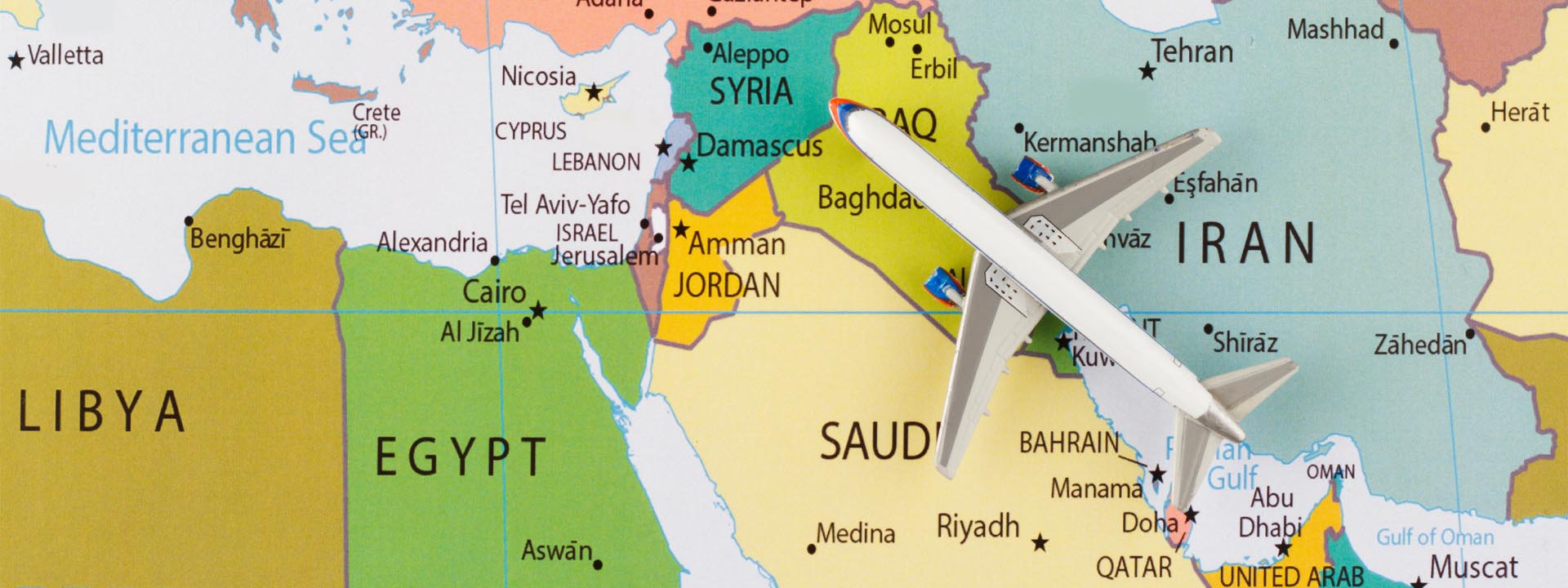
The ongoing war involving Israel and Gaza Strip (and the broader strategic involvement of the United States) has amplified uncertainty across the region.
While the conflict is geographically concentrated, its impact on business travel is global. Airlines are avoiding certain airspaces, military activity has heightened regional risk perceptions, and corporate duty-of-care policies are tightening. Some companies are restricting non-essential travel not just to affected areas, but to nearby transit hubs as well, resulting in a heavier reliance on virtual collaboration.

Fuel volatility and the price of travel
Geopolitical tension in the Middle East has direct consequences for aviation fuel prices. Any perceived risk to supply chains can trigger price spikes, and airlines feel the impact immediately. Global carriers such as Emirates and Lufthansa are navigating rising fuel costs alongside operational disruptions. Those pressures are increasingly passed on through higher fares, fuel surcharges, and reduced route flexibility.
For corporate travel programmes, this reinforces a trend toward stricter cost control: fewer travellers per trip, shorter stays, and greater internal scrutiny over whether travel is essential.
Border friction and policy shifts
Beyond conflict zones, geopolitical dynamics are influencing visas, entry requirements, and bilateral travel agreements. Processing delays, additional security checks, and shifting diplomatic relationships can all slow down business travel.
For multinational teams, this creates practical challenges, particularly when coordinating meetings across regions. Accessibility is becoming a deciding factor, with companies favouring destinations that offer smoother, more predictable entry for all participants.
A quiet shift in global business geography
As travel becomes more complex, companies are reassessing where they meet, invest, and operate. Locations that combine strong connectivity with political stability and straightforward travel requirements are gaining importance.
Over time, this can subtly reshape global business patterns. Regions that are harder to access (due to conflict, regulation, or cost) risk being deprioritised, regardless of their market potential.

Travel risk becomes a board-level concern
Corporate travel is increasingly tied to risk management. Organisations are expanding duty-of-care protocols, using real-time tracking tools, and relying on intelligence from global security providers.
Travel decisions are now informed not just by business need, but by safety, insurance considerations, and geopolitical outlook. In some firms, approval processes for international trips have become significantly more rigorous.
The bottom line
From the Middle East conflict and U.S. involvement to fuel price volatility and shifting global alliances, geopolitics is reshaping business travel in real time. For companies, adaptability is key. Because in a world where political developments can alter travel overnight, Selective Travel Management will ensure a seamless and stress-free solution.
Related Articles




96%